EGFR · Coverage-honest target dossier
UniProt — · kg_version 327 · Review: curated Indication scope: oncology (all) Generated: 2026-10-17

| axis | count | state | note |
|---|---|---|---|
| admet | ≥ 465 | truncated | floor |
| coessentiality | 50 | measured | |
| compounds | 10,456 | measured | |
| essentiality | 1 | measured | |
| mouse_compounds | 35 | measured | |
| organizations | 659 | measured | |
| papers | 5,978 | measured | |
| patents | 861 | measured | |
| ppi | 1,527 | measured | |
| structure | 1 | measured | |
| trials | ≥ 1,633 | truncated | floor |
How to read this page. Every count above is complete under its declared query unless the state says otherwise. A floor supports "at least N" and never an absence claim; a failed, not-addressable or grey axis supports no claim at all.
Verdict and scorecard
EGFR is a clinically validated, intensely competitive receptor tyrosine kinase with established human genetic evidence, mature small-molecule tractability, and multiple approved drugs. The target demonstrates established–human genetic validation through activating mutations in non-small cell lung cancer and glioblastoma, supported by 60 validation-cued publications spanning genetic, pharmacological, and in vivo models. Tractability is drugged with mature SAR: the 10,456 compounds include four approved TKIs (osimertinib, gefitinib, afatinib, dacomitinib) and three approved antibodies (cetuximab, panitumumab, necitumumab), with sub-nanomolar potencies achieved. Competition is saturated: 659 organizations hold 862 oncology patents filed since 2020, led by Dana-Farber (31 patents), Janssen (27), and Merus (17). Clinical precedent includes at least 1,633 trials, with standard-of-care status in EGFR-mutant NSCLC and multiple resistance mechanisms driving next-generation programs. Safety considerations include broad tissue expression (31 tissues >10 TPM, peak 78 TPM in skin), moderate gnomAD constraint (pLI 0.95 for one transcript), and known manageable toxicities (rash, diarrhea) in the approved agent class.
| Dimension | Call | What the call rests on | Coverage |
|---|---|---|---|
| Validation | established–human genetic | EGFR mutations drive NSCLC and glioblastoma; 60 validation papers (22 mouse in vivo, 14 genetic models); DepMap dependency fraction 0.18 | measured |
| Tractability | drugged, mature SAR | 10,456 compounds; 4 approved small molecules (osimertinib IC50 0.02 nM); 3 approved antibodies; 94 AlphaFold pockets, top druggability 0.81 | measured |
| Competition | saturated | 659 organizations, 862 patents (2020+), 31 coupled partners with whitespace scores <0.6; Dana-Farber, Janssen, Merus lead filings | measured |
| Clinical | standard of care exists | At least 1,633 trials; osimertinib, gefitinib, erlotinib, afatinib approved for EGFR+ NSCLC; cetuximab for colorectal/head-neck cancer | floor |
| Safety | known, manageable | GTEx: 78 TPM skin, 31 tissues >10 TPM; gnomAD pLI 0.95 (one transcript); approved drugs show manageable rash, diarrhea, rare ILD | measured |
Decision lens
New program: The saturated competition (659 organizations, 862 recent patents) and established standard of care make a differentiated EGFR program exceptionally challenging. Focus only if addressing a validated resistance mechanism (C797S, exon 20 insertions) with novel chemistry or modality, or pursuing a synthetic-lethal combination with one of the 31 coupled partners showing whitespace (SH3GL2 coupling 0.58, RUBCN 0.41). The 10,456 existing compounds and mature SAR demand clear structural differentiation.
Diligence on a company: Assess whether the asset addresses a defined resistance niche (T790M is solved by osimertinib; C797S and exon 20 insertions remain active areas). Examine the 1,633-trial floor for competitive timing and the 659-organization patent landscape for freedom to operate. For antibody-drug conjugates or bispecifics, evaluate differentiation from amivantamab (approved) and the 17 Merus patents. Validate that safety management (rash, diarrhea) is addressed, given broad tissue expression.
Combination partner search: The 31 coupled partners with measured whitespace offer synthetic-lethal hypotheses: SH3GL2 (endocytic adaptor, coupling 0.58, zero patents/compounds), RUBCN (autophagy regulator, 0.41), and ATP6V1G2 (vacuolar ATPase, 0.39) are biologically plausible and uncontested. The 1,527 protein interactions and 14 pathways provide mechanistic context. Prioritize partners where EGFR inhibition creates dependency, particularly in resistance settings where EGFR monotherapy fails.
Non-consensus angle
The 31 functionally coupled partners with whitespace scores below 0.6 represent underexplored synthetic-lethal opportunities in EGFR-altered cancers. SH3GL2 (endophilin-A1, PPI confidence 0.97, coupling 0.58) is an endocytic adaptor with zero patents and zero compounds; its role in EGFR internalization and downregulation suggests that SH3GL2 inhibition could trap activated EGFR at the membrane, prolonging oncogenic signaling in EGFR-mutant cells while sparing wild-type contexts where receptor turnover is less critical. RUBCN (rubicon, coupling 0.41) negatively regulates autophagy and has been implicated in EGFR trafficking; its modulation could exploit the autophagic stress of EGFR-driven tumors. ATP6V1G2 (V-ATPase subunit, coupling 0.39) controls endosomal pH, which governs EGFR recycling versus degradation; targeting it could force EGFR into degradative pathways. These partners are unaddressed by the 659 organizations and 862 patents focused on EGFR itself, and their DepMap co-essentiality or high-confidence PPI coupling provides a functional rationale. A combination of an EGFR TKI with a SH3GL2 or RUBCN modulator could overcome resistance by collapsing compensatory trafficking or autophagy, a mechanism orthogonal to the kinase-centric strategies dominating the field.
Biology and validation
| Entity type | Examples | Count |
|---|---|---|
| Validation papers (title-matched) | PMID:36898427 (METTL3-EGFR axis, mouse xenograft), PMID:34613810 (AKR1B1-glutathione, PDX), PMID:34548332 (HER3-DXd combination, clinical trial cue) | 43 of 60 |
| Model systems | Mouse (22 in vivo, 14 genetic), cell line (12 in vivo, 8 genetic), rat (2), zebrafish (1) | 60 papers |
| Diseases | NSCLC (EGFR exon 19 del, L858R), glioblastoma (EGFRvIII), colorectal cancer (wild-type, cetuximab), breast cancer (HER2 crosstalk) | — |
EGFR encodes a 1,210-amino-acid receptor tyrosine kinase that binds EGF-family ligands and activates RAS-MAPK, PI3K-AKT, and STAT pathways. Activating mutations (exon 19 deletions, L858R) drive 10–15% of NSCLC in never-smokers, and EGFRvIII deletions occur in 25% of glioblastomas. The 60 validation-cued papers include 22 mouse in vivo studies, 14 genetic models, and 12 pharmacological interventions; 43 name EGFR in the title. PMID:36898427 showed that METTL3 knockdown sensitized lenvatinib-resistant hepatocellular carcinoma to treatment in mouse xenografts by destabilizing EGFR mRNA. PMID:34613810 identified AKR1B1-mediated glutathione synthesis as a resistance mechanism to EGFR TKIs in patient-derived xenografts, validating AKR1B1 inhibition as a combination strategy. PMID:34548332 demonstrated that osimertinib enhanced HER3-DXd uptake in EGFR-mutant NSCLC, with a clinical trial recommendation. DepMap CRISPR (Chronos) reports a mean gene effect of −0.24 and dependency fraction of 0.18 across 1,208 cell lines, indicating context-dependent essentiality. The target participates in 14 Reactome pathways, including "Signaling by EGFR" and "Signaling by ERBB2," and shows 1,527 STRING interactions (999 confidence with CBL, CAV1, SOS1). Validation is established at the human genetic level, with decades of functional and clinical evidence.
Coverage: Validation evidence is measured. Papers (5,978), pathways (14), and DepMap essentiality (1,208 models) are complete to the declared query.
Tractability
| Entity type | Examples | Count |
|---|---|---|
| Approved drugs | Osimertinib (IC50 0.02 nM), gefitinib (0.029 nM), afatinib (0.01 nM), dacomitinib, erlotinib; cetuximab, panitumumab, necitumumab (antibodies) | 7 approved |
| Tool compounds | CHEMBL5270693 (IC50 0.01 nM), CHEMBL176582 (0.01 nM), neratinib (0.02 nM), mobocertinib (0.01 nM) | 10,456 total |
| Structural features | AlphaFold mean pLDDT 75.95, 94 pockets, top pocket volume 1,999 Ų, druggability score 0.81; kinase domain (residues ~700–950) | — |
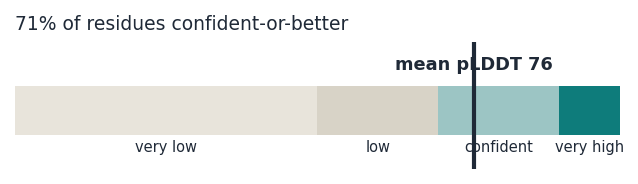
EGFR is drugged with mature SAR. The 10,456 ChEMBL compounds include four approved small-molecule TKIs: osimertinib (third-generation, T790M-selective, IC50 0.02 nM), gefitinib (first-generation, 0.029 nM), afatinib (second-generation irreversible, 0.01 nM), and dacomitinib (irreversible, approved 2018). Three approved antibodies target the extracellular domain: cetuximab (colorectal, head-neck cancer), panitumumab (colorectal), and necitumumab (NSCLC). The top 20 compounds by potency include mobocertinib (exon 20 insertion-selective, IC50 0.01 nM, approved 2021) and multiple sub-nanomolar tool molecules (CHEMBL5270693, CHEMBL176582). AlphaFold structure (P00533, version 6) shows a 1,210-residue protein with mean pLDDT 75.95, 47% high-confidence residues, and 94 predicted pockets; the top pocket (rank 1, volume 1,999 Ų, druggability 0.81) corresponds to the ATP-binding site. The kinase domain (residues ~700–950) is well-ordered (median pLDDT 89.12), and the extracellular domain supports antibody binding. Resistance mutations (T790M, C797S, exon 20 insertions) are structurally characterized and drive next-generation programs. Tractability is mature, with multiple approved agents and extensive SAR.
Coverage: Compounds (10,456), structure (AlphaFold v6), and pockets (94) are measured and complete.
Competition
| Entity type | Examples | Count |
|---|---|---|
| Organizations (top patent holders) | Dana-Farber Cancer Institute (31 patents), Janssen Biotech (27), Merus B.V. (17), University of Texas (16), Roche/Genentech (14) | 659 total |
| Recent patents (2020+) | CN122146614A (CAR-NK cells, Guizhou Medical Univ), US2020405878A1 (anti-EGFR ADC, AbbVie), AU2018311523A1 (Novartis) | 862 total |
| Approved competitors | Osimertinib (AstraZeneca), gefitinib (AstraZeneca), afatinib (Boehringer Ingelheim), cetuximab (Eli Lilly), panitumumab (Amgen) | 7 approved |
Competition is saturated. The 659 organizations hold 862 oncology patents filed since 2020, with Dana-Farber Cancer Institute leading (31 patents), followed by Janssen Biotech (27), Merus B.V. (17, bispecific antibodies), University of Texas (16), and Roche/Genentech (14). Big Pharma is heavily represented: AstraZeneca (osimertinib, 6 patents), Novartis (5), AbbVie (8, antibody-drug conjugates), Pfizer (Array Biopharma acquisition, 5), Regeneron (4), Daiichi Sankyo (4), and Merck KGaA (3). Chinese biotechs are active: Betta Pharmaceuticals (icotinib, 10 patents), BeiGene (10), Jiangsu Hengrui (7), Chia Tai Tianqing (8), and Abbisko Therapeutics (11). Emerging players include Blueprint Medicines (13 patents), Erasca (7, EGFR-selective inhibitors), Scorpion Therapeutics (4), and Loxo Oncology (Eli Lilly, 9). The 10,456 compounds span first- through fourth-generation TKIs, exon 20 insertion inhibitors (mobocertinib, CLN-081), and antibody-drug conjugates. At least 1,633 trials are ongoing or completed, with osimertinib as the standard of care in EGFR-mutant NSCLC. The 31 coupled partners with whitespace (SH3GL2, RUBCN, ATP6V1G2) are unaddressed by this patent set, but the EGFR kinase itself is exhaustively covered. Freedom to operate for a new EGFR inhibitor requires navigating a dense patent thicket.
Coverage: Organizations (659), patents (862), and compounds (10,456) are measured. Trials is a floor: at least 1,633.
Clinical precedent
| Entity type | Examples | Count |
|---|---|---|
| Phase 4 trials | NCT07600164 (pyrotinib + trastuzumab rezetecan, HER2+ breast cancer), NCT07279935 (osimertinib + chemotherapy, NSCLC recurrence), NCT07469488 (amivantamab prophylaxis, NSCLC) | 14 Phase 4 |
| Phase 3 trials | NCT07445048 (nimotuzumab + radiotherapy, head-neck cancer), NCT07128199 (zipalertinib adjuvant, stage IB-IIIA NSCLC), NCT07185997 (firmonertinib, PACC mutations) | 3 Phase 3 |
| Approved indications | Osimertinib (EGFR+ NSCLC, first-line and T790M+), gefitinib (EGFR+ NSCLC), afatinib (EGFR+ NSCLC), cetuximab (colorectal, head-neck), panitumumab (colorectal) | 7 approved |
Clinical precedent includes at least 1,633 trials, with standard-of-care status in EGFR-mutant NSCLC. Osimertinib (CHEMBL3353410) is the backbone: NCT07279935 tests osimertinib plus chemotherapy in patients with distant recurrence after adjuvant osimertinib (Phase 4, 100 patients, AstraZeneca). Pyrotinib (CHEMBL3647420, HER2/EGFR dual inhibitor) appears in four Phase 4 trials, including NCT07600164 (pyrotinib + trastuzumab rezetecan for HER2+ breast cancer, 500 patients) and NCT06217185 (pyrotinib + trastuzumab + taxanes, 100 patients). Amivantamab (CHEMBL4297774, EGFR/MET bispecific antibody, approved 2021) is tested in NCT07469488 for enhanced prophylaxis of rash, infusion reactions, and VTE (Phase 4, 122 patients). Nimotuzumab (CHEMBL2108359, anti-EGFR antibody) is in two Phase 3 trials for head-neck cancer (NCT07445048, NCT07333274). Firmonertinib (CHEMBL4297258, third-generation TKI) is in Phase 3 for PACC (P-loop/alpha-C-helix compressing) uncommon mutations (NCT07185997, 480 patients, ArriVent). CLN-081 (zipalertinib, CHEMBL4650281, exon 20 insertion inhibitor) is in Phase 3 adjuvant (NCT07128199, 360 patients, Taiho). Icotinib (CHEMBL2087361, first-generation TKI, approved in China) appears in 14 trials, mostly Phase 4. The trial floor (1,633) underestimates total activity, as it derives from compound-name searches. Standard of care exists for EGFR-mutant NSCLC (osimertinib first-line), colorectal cancer (cetuximab, panitumumab in RAS wild-type), and head-neck cancer (cetuximab + radiotherapy).
Coverage: Trials is a floor: at least 1,633.
Safety and liability
| Entity type | Examples | Count |
|---|---|---|
| High-expression tissues (GTEx, >10 TPM) | Skin (sun-exposed 78 TPM, non-sun-exposed 76 TPM), fibroblasts (61 TPM), nerve (43 TPM), vagina (41 TPM), adipose (40 TPM) | 31 tissues |
| gnomAD constraint | pLI 0.95 (transcript ENST00000342916), oe_lof_upper 0.50 (most constrained); canonical pLI 0.39, oe_lof_upper 0.50 | 7 transcripts |
| IMPC phenotypes | Decreased leukocyte count (male heterozygote, p=4.8×10⁻⁶, effect size −2.78) | 1 call |
| Approved drug toxicities | Rash (class effect, manageable with topical steroids), diarrhea (dose-limiting in some patients), interstitial lung disease (rare, <3% with osimertinib) | — |
EGFR is broadly expressed, with GTEx median TPM >10 in 31 of 54 tissues. The highest expression is in skin (sun-exposed 78 TPM, non-sun-exposed 76 TPM), cultured fibroblasts (61 TPM), tibial nerve (43 TPM), and vagina (41 TPM). Epithelial tissues (esophagus, breast, lung) show 20–35 TPM. Brain expression is low (2–8 TPM across regions). gnomAD constraint varies by transcript: the most constrained (ENST00000342916) has pLI 0.95 and oe_lof_upper 0.50, indicating intolerance to loss-of-function; the canonical transcript (ENST00000275493) has pLI 0.39 and oe_lof_upper 0.50. This suggests haploinsufficiency risk in some contexts, though germline EGFR mutations are not a recognized Mendelian disease. IMPC knockout mice (heterozygote males) show decreased leukocyte count (p=4.8×10⁻⁶), affecting immune and hematopoietic systems. Approved EGFR inhibitors cause known, manageable toxicities: rash (acneiform, 50–80% incidence, responsive to topical steroids and doxycycline), diarrhea (20–50%, dose-limiting in some patients), and rare interstitial lung disease (<3% with osimertinib, higher with earlier-generation TKIs). The broad tissue expression, particularly in skin and gut epithelium, explains the on-target toxicities. The 14 Reactome pathways include "Signaling by EGFR" and crosstalk with ERBB2, ERBB3, and ERBB4, indicating that EGFR inhibition may affect compensatory HER-family signaling. The 1,527 protein interactions include CBL (ubiquitin ligase, 999 confidence), CAV1 (caveolin, 999), and SOS1 (RAS-GEF, 999), suggesting that EGFR modulates endocytosis, membrane trafficking, and RAS activation. Safety is known and manageable in the approved drug class, but broad expression and constraint in some transcripts warrant monitoring for on-target effects.
Coverage: GTEx (54 tissues), gnomAD (7 transcripts), IMPC (1 gene), pathways (14), and PPI (1,527) are measured.
Translational risk
Rendered by code from the stored records; no sentence on this page is written by a model.
Species potency: human vs mouse
| Mouse ortholog | Egfr (MGI:95294; UniProt Q01279; ChEMBL CHEMBL3608) |
| Sequence identity | 90.5% full length; 100.0% over 14 binding-site residues |
| Binding site | UniProt BINDING + ACT_SITE residues of the human canonical sequence (features under 50 residues), aligned to the mouse ortholog by global alignment |
| Mouse chemistry | 35 compounds, 37 activities (measured) |
| Declared query | ChEMBL /activity: target = Mus musculus CHEMBL3608, for UniProt Q01279 (Egfr), standard_type IN (IC50,Ki,Kd,EC50), standard_relation '=', pchembl_value >= 5 |
| Comparison | Shared compounds | Median human pChEMBL | Median mouse pChEMBL | ΔpChEMBL (mouse − human) | Role |
|---|---|---|---|---|---|
| Like for like: cell-free, same standard type | 2 | 7.59 | 6.58 | -1.01 | the species comparison |
| Matched cellular | 5 | 7.81 | 7.84 | +0.03 | context only |
No verdict either way: only 2 compound(s) were measured cell-free with the same standard type on both species, fewer than the 8 a verdict needs. Their median ΔpChEMBL (-1.01) is not a finding at this count.
Like-for-like compounds, most divergent first (2 of 2):
| Compound | Human pChEMBL | Mouse pChEMBL | ΔpChEMBL |
|---|---|---|---|
| SORAFENIB (CHEMBL1336) | 6.96 | 5.46 | -1.50 |
| DACOMITINIB ANHYDROUS (CHEMBL2110732) | 8.22 | 7.70 | -0.52 |
The species comparison uses only compounds measured cell-free (ChEMBL BAO_0000357 single-protein format, no cell or tissue fields, no mutant protein) with the same standard type on both species. The matched-cellular row is context only: mouse cell assays are often engineered lines expressing a transgene, so they do not measure the mouse protein.
Tool-compound liabilities
| Measure | Count | Rule |
|---|---|---|
| Assessed | 50 of 10,376 active compounds | the 50 most potent of this target's 10376 active compounds (pChEMBL >= 5 on IC50/Ki/Kd/EC50 in the curated KG), each assessed in ChEMBL |
| PAINS-flagged | 0 | at least one ChEMBL structural alert from the PAINS set |
| Brenk-flagged | 34 | at least one ChEMBL structural alert from the Brenk ('Dundee') set |
| Promiscuous | 5 (3 not approved) | more than 5 other human single-protein targets at pChEMBL ≥ 6 |
| hERG-tested | 6 | at least one hERG (CHEMBL240) activity recorded |
| ADME activities | at least 465 | ChEMBL assay_type 'A' for the assessed compounds |
Promiscuous (5): ERLOTINIB (CHEMBL553), 46 off-targets; CANERTINIB (CHEMBL31965), 41 off-targets; CHEMBL1229592, 15 off-targets; AFATINIB (CHEMBL1173655), 14 off-targets; POZIOTINIB (CHEMBL3545154), 8 off-targets.
PAINS-flagged (0): 0 of the assessed compounds.
Brenk-flagged (34): ERLOTINIB (CHEMBL553), 2 alert(s); CANERTINIB (CHEMBL31965), 2 alert(s); CHEMBL1229592, 1 alert(s); AFATINIB (CHEMBL1173655), 1 alert(s); POZIOTINIB (CHEMBL3545154), 2 alert(s); CHEMBL285063, 1 alert(s); LAPATINIB (CHEMBL554), 1 alert(s); CHEMBL275762, 2 alert(s); CHEMBL4756368, 1 alert(s); CHEMBL4787483, 1 alert(s); CHEMBL5282641, 2 alert(s); CHEMBL5288888, 1 alert(s); CHEMBL1243316, 3 alert(s); CHEMBL3613702, 2 alert(s); CHEMBL363815, 2 alert(s); CHEMBL4100860, 1 alert(s); CHEMBL4103912, 1 alert(s); CHEMBL4521381, 1 alert(s); CHEMBL5180388, 1 alert(s); CHEMBL5186680, 1 alert(s); CHEMBL5193123, 1 alert(s); CHEMBL5195904, 1 alert(s); CHEMBL5270693, 1 alert(s); CHEMBL5271803, 2 alert(s); CHEMBL5284924, 1 alert(s); CHEMBL5393923, 1 alert(s); CHEMBL5399653, 1 alert(s); CHEMBL5422588, 1 alert(s); CHEMBL5432965, 1 alert(s); CHEMBL5434495, 1 alert(s); CHEMBL5436031, 1 alert(s); CHEMBL5805801, 1 alert(s); CHEMBL5811442, 1 alert(s); CHEMBL5874605, 1 alert(s).
hERG-tested (6): ERLOTINIB (CHEMBL553), 2 activities; AFATINIB (CHEMBL1173655), 2 activities; POZIOTINIB (CHEMBL3545154), 1 activity; LAPATINIB (CHEMBL554), 3 activities; CHEMBL5282641, 1 activity; CHEMBL5288888, 1 activity.
Highest liability first (10 of 50 assessed compounds listed):
| Compound | pChEMBL on EGFR | Max phase | PAINS | Brenk | Off-targets (pChEMBL ≥ 6) | hERG activities |
|---|---|---|---|---|---|---|
| ERLOTINIB (CHEMBL553) | 10.54 | 4 | 0 | 2 | 46 | 2 |
| CANERTINIB (CHEMBL31965) | 10.40 | 3 | 0 | 2 | 41 | 0 |
| CHEMBL1229592 | 10.40 | — | 0 | 1 | 15 | 0 |
| AFATINIB (CHEMBL1173655) | 10.21 | 4 | 0 | 1 | 14 | 2 |
| POZIOTINIB (CHEMBL3545154) | 10.21 | 3 | 0 | 2 | 8 | 1 |
| CHEMBL285063 | 10.10 | — | 0 | 1 | 5 | 0 |
| LAPATINIB (CHEMBL554) | 10.22 | 4 | 0 | 1 | 5 | 3 |
| CHEMBL29197 | 10.60 | — | 0 | 0 | 4 | 0 |
| CHEMBL275762 | 10.15 | — | 0 | 2 | 1 | 0 |
| CHEMBL328106 | 10.14 | — | 0 | 0 | 1 | 0 |
These counts are floors. They record what ChEMBL holds for the assessed compounds; a compound without a flag is unprofiled for that liability, not clean, selective or safe. Off-targets include paralogues of EGFR.
A hERG-tested compound has at least one hERG (CHEMBL240) activity recorded; that it was measured is not a hERG liability.
Coverage: mouse_compounds is measured; admet is a floor: at least 465.
Open questions
-
Which resistance mechanisms to osimertinib are clinically actionable, and do any of the 31 coupled whitespace partners (SH3GL2, RUBCN, ATP6V1G2) synergize with EGFR inhibition in resistant models? Evidence needed: DepMap co-lethality screens in osimertinib-resistant lines (C797S, MET amplification), and in vivo validation of SH3GL2 or RUBCN knockdown plus osimertinib in patient-derived xenografts.
-
What is the structural basis for exon 20 insertion selectivity in mobocertinib and CLN-081, and can this inform next-generation inhibitors with improved CNS penetration? Evidence needed: co-crystal structures of mobocertinib and CLN-081 bound to exon 20 insertion mutants, and pharmacokinetic data on brain:plasma ratios in preclinical models.
-
Do the 659 organizations and 862 patents create freedom-to-operate barriers for novel EGFR inhibitors, or is there structural space around the 10,456 existing compounds? Evidence needed: patent landscape analysis of composition-of-matter claims for fourth-generation TKIs, and computational docking to identify unexplored binding modes in the 94 AlphaFold pockets.
-
Can the broad tissue expression (31 tissues >10 TPM) and gnomAD constraint (pLI 0.95 in one transcript) predict patient subsets at higher risk for on-target toxicities, and does this inform dosing strategies? Evidence needed: pharmacogenomic analysis of rash and diarrhea incidence versus EGFR germline variants in the osimertinib clinical trial cohort (FLAURA, ADAURA).
-
What is the clinical utility of combining EGFR inhibitors with autophagy modulators (targeting RUBCN) or endocytic trafficking inhibitors (targeting SH3GL2) in EGFR-mutant NSCLC? Evidence needed: Phase 1b trial of osimertinib plus a RUBCN inhibitor (if available) or chloroquine (autophagy inhibitor) in osimertinib-refractory patients, with PFS and resistance mutation profiling as endpoints.
Verification and evidence
Verifier: 0 findings. Every figure in the prose was traced to the evidence.
Raw evidence keys: EGFR_evidence.json (not repeated here).
Evidence appendix
Each figure with the tool that produced it. Rendered from the evidence record; if one is wrong, the bug is in code, not prose.
biology_and_rationale — get_target_profile
- compound_count: 10,456 (
measured, governed by the compounds axis) - patent_count: 862 (
measured, governed by the patents axis) - paper_count: 6,013 (
measured, governed by the papers axis) - organization_count: 660 (
measured, governed by the organizations axis) - top_compounds: 5 item(s)
evidence_for_causality — get_target_validation_summary
- total_evidence: 60
- validation_types: 4 item(s)
tractability_structure — get_target_structure
- seq_length: 1,210
- mean_plddt: 75.95
- median_plddt: 89.12
- plddt_high_frac: 0.4736
- plddt_confident_frac: 0.7066
- plddt_low_frac: 0.2281
- disorder_frac: 0.2281
- pocket_count: 94
- top_pocket_volume: 1,998.831
- top_pocket_score: 0.814
- pockets: 5 item(s)
tractability_chemistry — get_target_compounds
- 20 item(s)
competitive_position — get_competitive_landscape
- total_orgs: 648
- total_compounds: 10,456
- total_patents: 862
- patent_assignee_pairs: 1,192
- organizations: 648 item(s)
- compounds: 10456 item(s)
- patents: 1192 item(s)
ip_position — get_target_patents
- 20 item(s)
clinical_precedent — get_clinical_pipeline
- total_entries: 50
- real_trials_count: 50
- synthesized_count: 0
- compounds: 16 item(s)
- pipeline: 50 item(s)
- data_sources: 2 item(s)
safety_and_liability — get_pathway_context
- pathway_count: 14
- related_target_count: 13
- pathways: 14 item(s)
- related_targets: 13 item(s)
- protein_interactions: 1527 item(s)
non_consensus — find_synthetic_lethal_whitespace
- total: 31
- coupled_unassessed_total: 1,275
- assessed_fraction: 0.0237
- candidates_using_real_coessentiality: 6
- candidates_using_ppi_only: 0
- candidates_using_ppi_and_pathway: 0
- candidates_outside_mosaic_kg: 1,275
- anchors: 1 item(s)
- candidates: 20 item(s)
- coupled_unassessed: 20 item(s)
species_gap — translational:species_gap
- mouse_tax_id: 10,090
- full_length_identity_pct: 90.5
- pocket_sequence_identity_pct: 100
- pocket_residue_count: 14
- mouse_compounds_count: 35 (
measured, governed by the mouse_compounds axis) - mouse_activities_count: 37
- human_activities_count: 20,121
- shared_human_mouse_compounds_count: 2
- median_human_pchembl: 7.59
- median_mouse_pchembl: 6.58
- delta_pchembl: -1.01
- species_potency_shift_ratio: 0.098
- mouse_cellfree_compounds_count: 7
- cellular_shared_compounds_count: 5
- cellular_median_human_pchembl: 7.81
- cellular_median_mouse_pchembl: 7.84
- cellular_delta_pchembl: 0.03
- cellular_shift_ratio: 1.072
- naive_shared_compounds_count: 23
- naive_delta_pchembl: -0.965
- shared_compounds: 2 item(s)
- cellular_shared_compounds: 5 item(s)
tool_compound_liabilities — translational:tool_compound_liabilities
- compounds_active_total: 10,376
- compounds_assessed: 50
- pains_flagged_compounds_count: 0
- brenk_flagged_compounds_count: 34
- promiscuous_compounds_count: 5
- promiscuous_tool_compounds_count: 3
- median_off_target_count: 0
- herg_tested_compounds_count: 6
- admet_activities_count: at least 465 (
truncated, governed by the admet axis) - top_liabilities: 50 item(s)